Preserving Indigenous Identity Through Visual Storytelling
For this design project, I chose to spotlight the Dongria Kondh tribe of Odisha — a resilient Indigenous community known for their sacred connection to the Niyamgiri hills. Faced with industrial encroachment and ecological threats, their story is one of fierce resistance and profound cultural strength.
This book is a visual narrative — a blend of research, storytelling, and emotionally charged illustrations — that aims to amplify their voices and honor their identity.
1. The Cover: Symbolism in Every Stroke
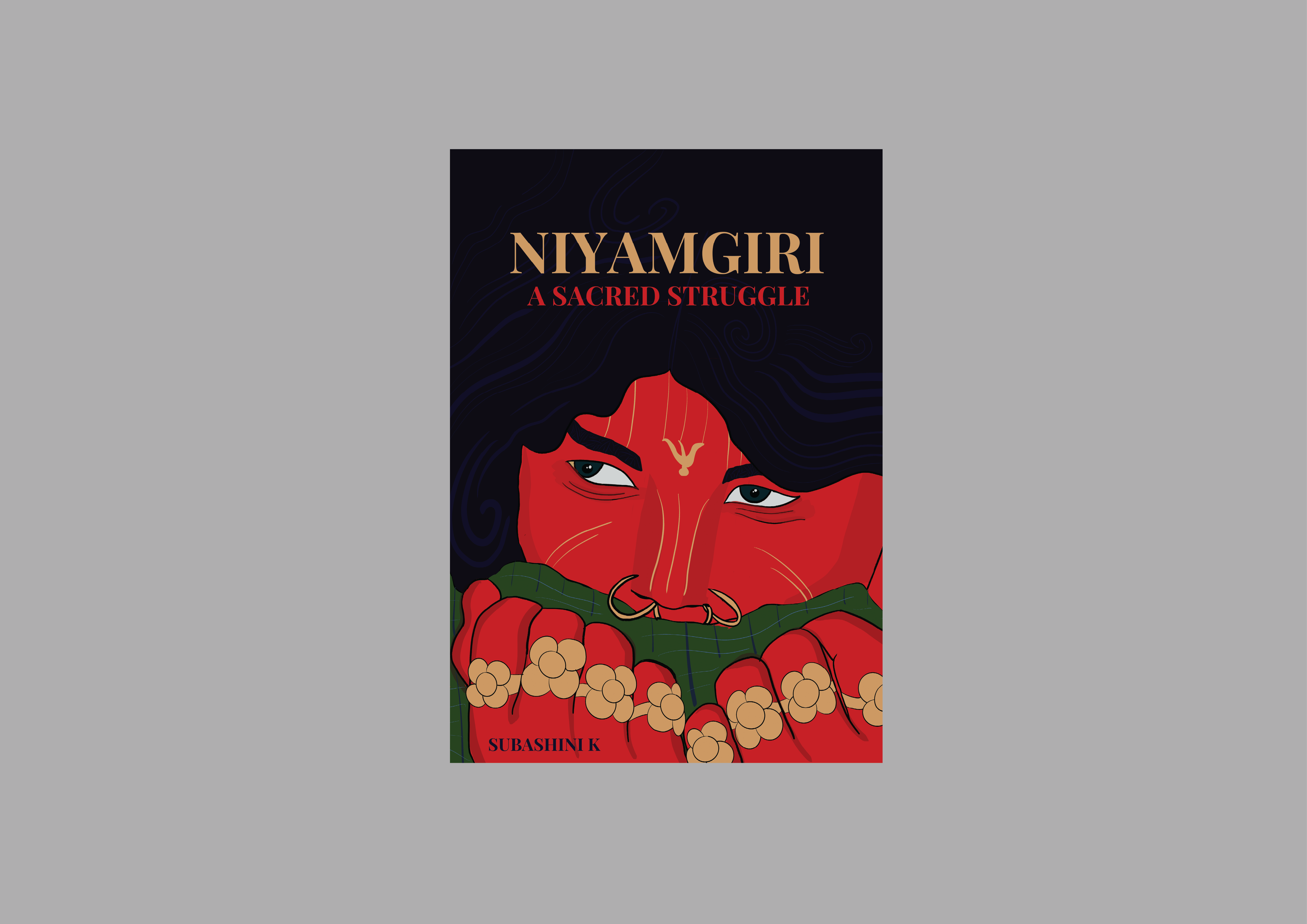
The cover sets the tone for the entire book. A bold red face peers out from behind the Niyamgiri hills — fierce, watchful, and unafraid. The use of red symbolizes both danger and strength, while green and gold represent the forest and sacredness. The artwork draws inspiration from traditional Indian tribal art styles, reimagined in a contemporary visual language.
The deep black background with subtle line motifs echoes the mystery and spiritual richness of the tribe’s beliefs.
2. Visual Language and Color Palette
Throughout the book, I’ve used a limited but striking color palette — red, deep green, gold, and black — to maintain a sense of urgency and reverence. Every illustration is intentional: from the depiction of rituals and dress to the looming presence of mining machinery.
Typography is kept minimal and clean, allowing the illustrations and the tribe’s story to take center stage.
3. Design Strategy: Story as Resistance
The book is divided into thematic sections:
- The Land and the Gods
- The People and their Beliefs
- The Threat of Vedanta Resources
- The Fight to Protect Niyamgiri
- The Legacy of Resistance
Each section weaves real-life narratives with visuals that evoke empathy and awareness — aiming not just to inform, but to move the reader emotionally.
4. Purpose and Impact
This book is more than a project — it’s a platform. A way to make young readers, artists, and urban audiences pause and reflect on whose land development displaces, and what cultural wealth we risk erasing in the name of progress.
The goal was not just to showcase identity — but to preserve it, protect it, and pass it on through design.
Reflection
Creating Niyamgiri: A Sacred Struggle taught me that design can be activism. By merging illustration with research, I was able to explore how visual storytelling can become a form of cultural preservation. I hope the work sparks curiosity and empathy — and reminds us that every Indigenous community holds a sacred story worth fighting for.